How Smart Door Locks Are Made: A Factory Guide to Quality, Testing, and OEM Production
When buyers search for a smart door lock manufacturer, they often start with the product itself: fingerprint recognition, PIN codes, mobile apps, facial recognition, waterproof protection, or remote access.
But for distributors, brands, and project buyers, the more important question is often hidden behind the product: How is the smart lock actually manufactured, tested, and prepared for the market?
A smart door lock is not simply an electronic device attached to a door. It combines mechanical components, electronic hardware, firmware, wireless communication, batteries, sensors, and exterior materials into one product. That is why the factory behind the product matters.
At Xianda Smart Lock, we manufacture smart door locks for international B2B customers, including distributors, wholesalers, brands, and OEM/ODM projects. In this article, we take you inside the manufacturing process and explain what buyers should actually look at when evaluating a smart lock factory or supplier.
1. A Smart Lock Is More Than an Electronic Product
One of the most common misunderstandings in the smart lock industry is treating the product as an electronic device only. In reality, a complete smart door lock usually contains several systems working together:
- Mechanical lock body and transmission components
- Exterior and interior lock panels
- Fingerprint or biometric sensors
- Keypad or touchscreen
- Main control board
- Wireless communication module
- Battery and power management system
- Motor and clutch mechanism
- Emergency power interface
- Firmware and mobile application
- Screws, connectors, cables and other internal components
The quality of the final product depends on how these systems work together. For example, a fingerprint sensor may perform well in laboratory conditions, but the overall lock can still have problems if the motor is not correctly calibrated, the battery management is unstable, or the mechanical transmission is poorly assembled.
This is why experienced buyers should evaluate the entire manufacturing process, rather than comparing smart locks only by their feature lists.
2. Inside a Smart Lock Factory
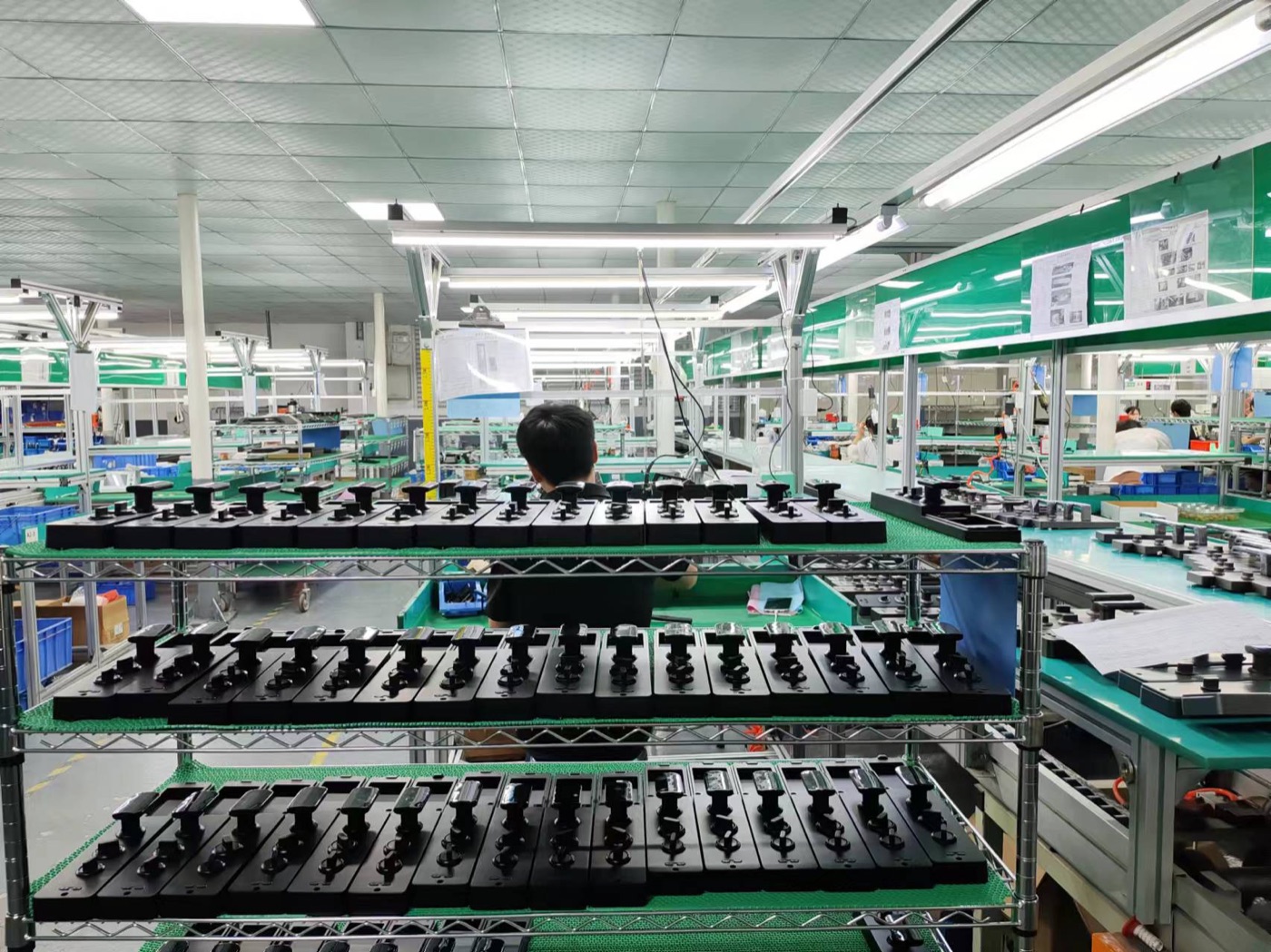
A professional smart lock factory normally involves multiple production and inspection stages. The process can vary depending on the model and production requirements, but a typical workflow includes:
Each stage has a different purpose.
Incoming Material Inspection
Before assembly begins, key components need to be checked. Depending on the product, this may include:
- Aluminum alloy panels
- Lock bodies
- PCBs
- Fingerprint modules
- Displays
- Motors
- Batteries
- Wireless modules
- Cables and connectors
- Screws and mechanical components
A smart lock manufacturer cannot rely only on the final inspection to discover problems. Controlling component quality at the beginning of production reduces the possibility of defects reaching the finished product.
3. Mechanical Assembly Matters as Much as Electronics
Smart lock buyers sometimes focus heavily on functions such as fingerprint recognition or app control. However, the mechanical structure remains critical.
The motor must operate the lock mechanism correctly. The transmission system needs to move smoothly. The exterior panels need to fit accurately with the internal components. The lock also needs to be installed correctly on the customer's door.
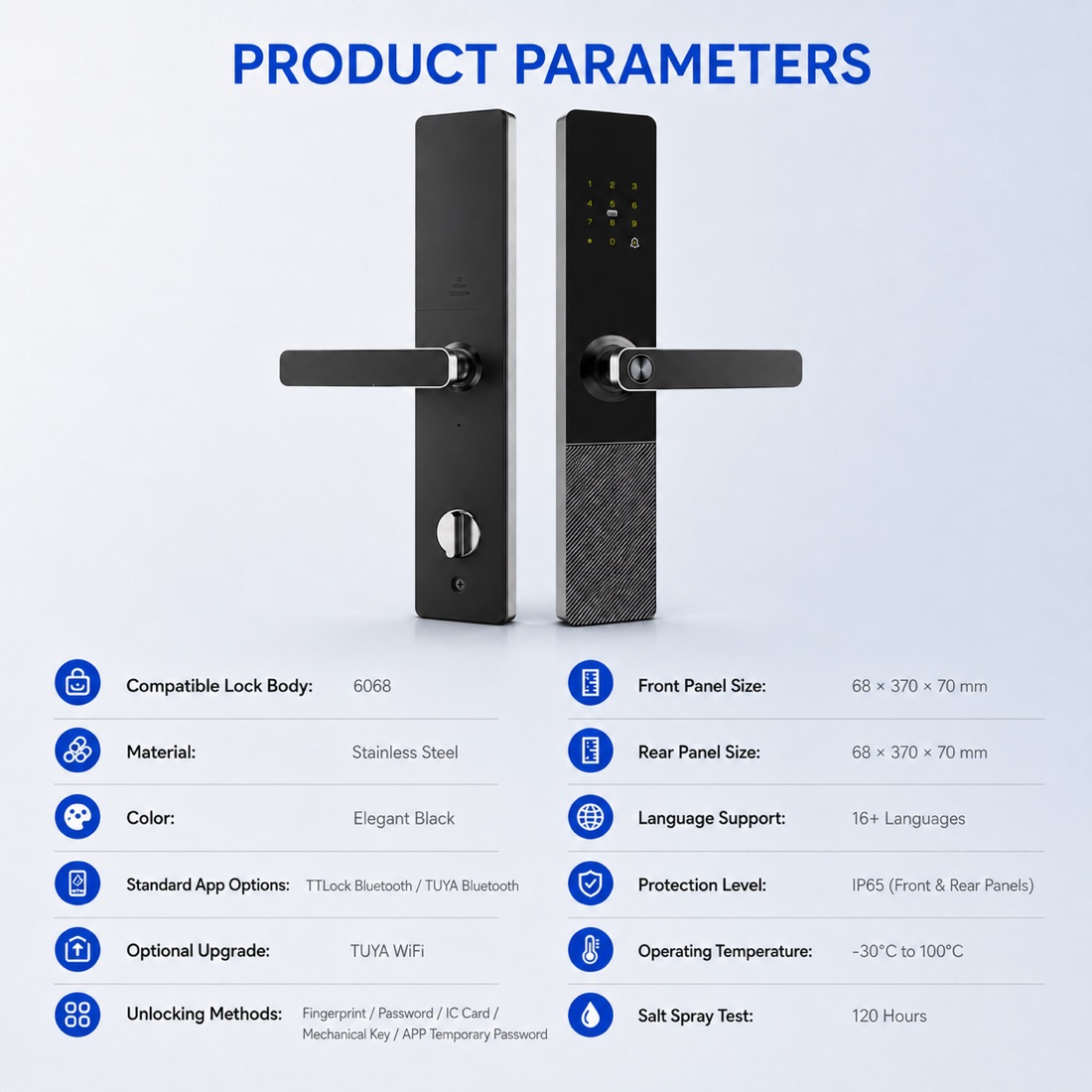
This becomes especially important for international projects because door structures and lock body standards can vary between markets. For this reason, buyers should confirm the required lock body specification before placing an order.
For example, some of our smart lock models can be configured for different lock body options, depending on the project requirements.
4. Electronic Assembly and Functional Testing
The electronic system is the core of a modern smart lock. Depending on the model, the electronics may control:
- Fingerprint recognition
- Password input
- RFID or IC card access
- Facial recognition
- Bluetooth communication
- Wi-Fi connectivity
- Mobile application functions
- Motor operation
- Battery monitoring
- Low-battery alerts
- Emergency power functions
During production, electronic components need to be assembled and connected correctly before the finished lock moves to functional testing. A useful production principle is simple:
Do not wait until the final product is packaged to discover an electronic problem.
Testing at different production stages allows manufacturers to identify problems earlier and reduce rework.
5. Why Smart Lock Aging Testing Is Important
A smart lock may work perfectly when it is first assembled. That does not necessarily mean it will perform reliably after continuous operation. This is where aging testing becomes useful.
During an aging or endurance test, the product can be operated repeatedly to identify potential issues related to:
- Motor operation
- Power consumption
- Electronic stability
- Communication
- Fingerprint recognition
- Keypad operation
- Battery performance
- Repeated locking and unlocking
The exact testing procedure depends on the model and customer requirements. For B2B buyers, this is an important distinction between simply buying an electronic product and working with an experienced smart door lock manufacturer.
6. Waterproof Protection Is a System, Not Just an IP Rating
Outdoor smart locks require another level of consideration. Many products are marketed with an IP rating, but the rating itself should not be treated as the entire waterproofing story.
The actual protection of a smart lock depends on the product structure, seals, component placement, housing design, connectors, and manufacturing quality.
For example, our outdoor-oriented smart lock models can be designed with waterproof protection for applications where the exterior lock panel is exposed to environmental conditions.
For buyers, the important question is not simply: “Does this lock have IP65?” A better question is:
What conditions was the product designed and tested for, and which part of the lock does the protection apply to?
This distinction is particularly important for residential entrances, villas, apartments, hotels, offices, and other outdoor-facing applications.
7. Software Is Part of the Product
A smart door lock is not complete when the hardware leaves the assembly line. The user experience also depends on the software ecosystem. Depending on the model, smart locks may support functions such as:
- Mobile app management
- Remote unlocking
- Temporary passwords
- User management
- Access records
- Bluetooth connectivity
- Wi-Fi connectivity
- Voice assistant integration
For international buyers, software compatibility can be just as important as the hardware. A distributor may have an excellent-looking lock, but if the application experience is poor or the required functions are unavailable in the target market, the product becomes difficult to sell.
This is why OEM/ODM cooperation should include more than logo printing. The buyer and manufacturer should discuss hardware configuration, firmware, application requirements, packaging, user instructions, and market-specific requirements.
8. What Does OEM Mean in Smart Lock Manufacturing?
OEM is often misunderstood in the smart lock industry. For a professional B2B project, OEM can involve much more than putting a customer's logo on an existing product. Depending on the project, OEM customization may include:
- Customer logo
- Product appearance
- Packaging
- User manual
- Product labels
- Product colors
- Hardware configuration
- Lock body configuration
- Firmware requirements
- Application requirements
- Customized product specifications
For example, a distributor may want an existing smart lock platform with its own branding and packaging. A real OEM project should therefore begin with a discussion about the target market and application, rather than simply asking:
How much is one piece?
9. ODM: When the Product Needs to Be Different
ODM is suitable when a customer needs more substantial product development or customization. For example, a brand may have a specific requirement for:
- Door compatibility
- Exterior design
- Unlocking methods
- Fingerprint module
- Camera or display
- Battery capacity
- App functions
- Installation structure
- Packaging
In these cases, the manufacturer needs to evaluate the technical requirements before providing a final quotation. This is one reason experienced buyers should provide as much project information as possible when contacting a smart lock supplier.
The more clearly the application is defined, the more accurately the manufacturer can recommend the right configuration.
10. What Should Buyers Ask a Smart Lock Factory?
If you are sourcing smart door locks from China, price should not be the only comparison point. Here are several questions worth asking your supplier.
1. What lock bodies are supported?
A smart lock may look suitable for a project but still require a different lock body or installation structure.
2. What wireless technology does the product use?
Ask whether the model uses Bluetooth, Wi-Fi, or another wireless technology and what frequency and transmission specifications apply. This information may also be required for regulatory approval in certain markets.
3. How is the product tested?
Ask about functional testing, aging testing, mechanical testing, battery testing, and other relevant quality-control procedures.
4. Can the product support OEM/ODM?
If you are building your own brand, confirm what can actually be customized.
5. What documents are available?
Depending on the target market, buyers may need technical specifications, test reports, declarations, manuals, product labels, packaging information, and other documentation.
6. Can the factory support small trial orders?
For a new supplier relationship, a sample or small trial order can be useful before moving to larger quantities.
11. Why Factory Transparency Matters
For international B2B buyers, the relationship with a supplier does not end after the quotation. A long-term supplier needs to support:
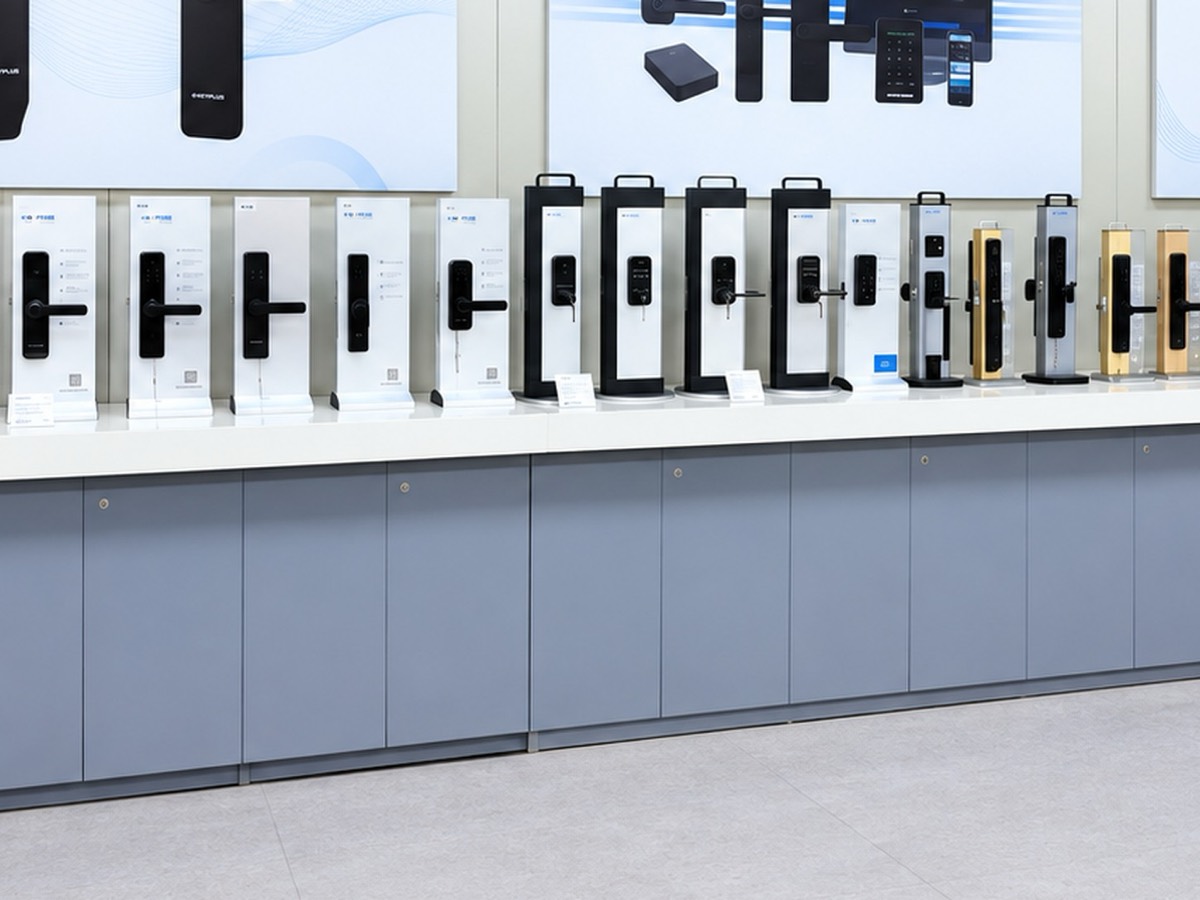
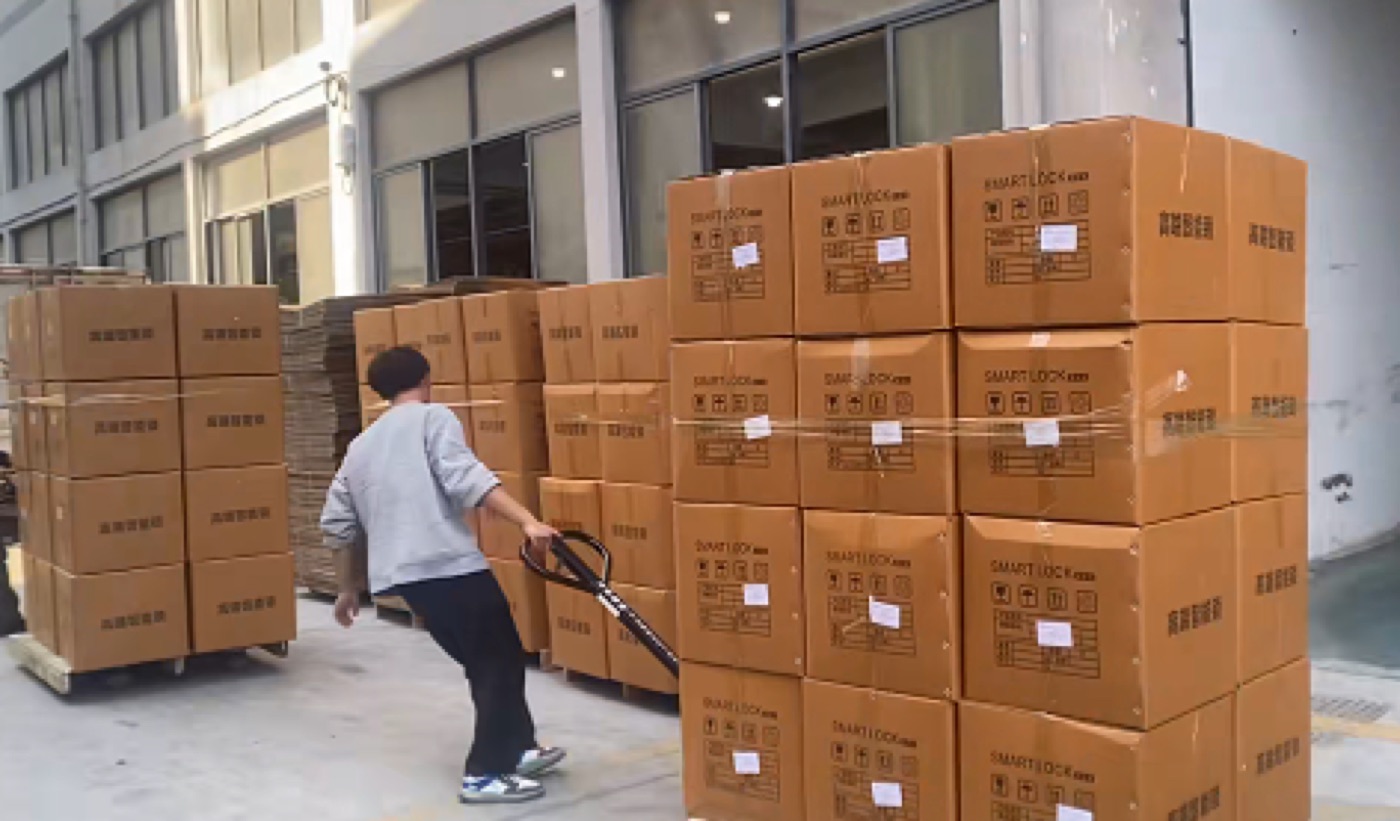
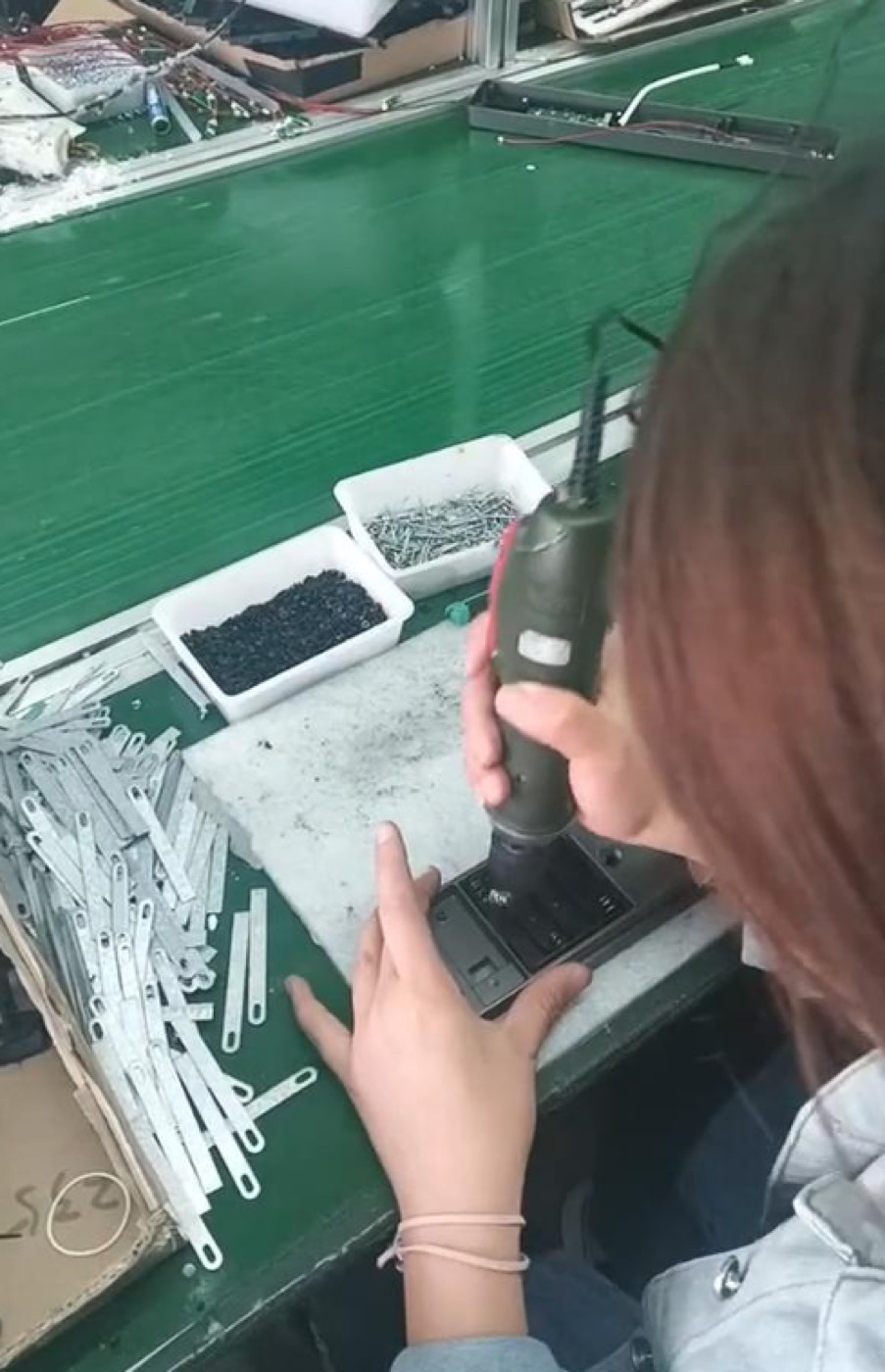
This is why we believe factory transparency is important. Instead of showing only finished product photographs, we also show the manufacturing environment, assembly process, testing procedures, and production details.
These images are not simply marketing materials. They help buyers understand where the product comes from and how it is manufactured.
12. Choosing the Right Smart Lock for Your Market
There is no single smart lock that is perfect for every market. A lock designed for an apartment project may not be the best choice for a villa. A low-cost residential product may not be appropriate for a premium hotel project. An outdoor application may require different environmental protection than an indoor office.
Before selecting a model, buyers should consider:
- Target customer
- Door type
- Lock body
- Installation environment
- Unlocking methods
- Wireless connectivity
- Battery requirements
- Software ecosystem
- Local regulations
- Target retail price
- Packaging requirements
- Expected order quantity
This approach usually produces a better result than simply selecting the lock with the longest feature list.
13. From Factory to Global Market
The smart lock industry is becoming increasingly global. Customers in different markets can have very different requirements for door structures, software, certifications, packaging, languages, installation methods, and price positioning.
For manufacturers, this means the job is not simply to produce more smart locks. It is to build products that can be adapted to different market requirements.
At Xianda Smart Lock, we work with international B2B customers on smart door lock supply, OEM/ODM projects, product customization, and market-specific requirements. Our goal is straightforward:
Build a reliable product, manufacture it consistently, and make it easier for our partners to bring it to their market.
Conclusion
A smart door lock is the result of mechanical engineering, electronics, software, manufacturing, and quality control working together. For distributors, brands, and project buyers, choosing the right smart door lock supplier is therefore not simply about finding the lowest price.
The better question is: Can this manufacturer consistently produce the product I need, customize it for my market, provide the required documentation, and support the project after the first shipment?
That is the standard we believe a professional smart lock manufacturer should meet.
If you are looking for a smart lock factory in China for distribution, OEM, ODM, or a specific door-lock project, contact our team with your target market, required functions, lock body specification, and estimated quantity. We can then recommend a suitable product configuration and discuss the next step.
Frequently Asked Questions
What should I look for in a smart door lock manufacturer?
Look beyond the product catalogue. Check manufacturing capability, quality-control procedures, testing processes, customization capabilities, documentation, communication, and after-sales support.
Can smart locks be customized with my brand?
Yes. Depending on the model and order quantity, OEM customization may include logos, packaging, labels, manuals, product configuration, and other requirements.
Can smart locks be customized for different lock bodies?
Many models can be configured for different lock body specifications, but compatibility should be confirmed before ordering.
Do smart locks need certifications?
Certification and regulatory requirements depend on the product configuration and destination market. Products containing wireless communication functions may be subject to additional requirements in certain countries.
Can I order samples before a bulk order?
Sample orders are commonly used to evaluate product quality, installation compatibility, software functions, and market suitability before larger production orders.